

Back
How to save on household bills: 7 ways Australians cut costs fast
If you’re wondering how to save on bills, the fastest way is to review your biggest expenses, switch providers and cut unnecessary costs. Many Australians are saving money on electricity and reducing household expenses just by making a few simple changes.
How to save money on household bills (7 easy steps)
If you want to save money on household bills and reduce household expenses right now, these are the most effective ways Australians are saving money:
- Review your budget and cancel unused subscriptions
- Compare gas or electricity, and insurance providers
- Switch to LED lighting and optimise air conditioning settings
- Trim $20–$50 per week from grocery spending by utilising offers and shopping at multiple stores instead of sticking to one
- Negotiate your phone and internet plans and be willing to switch providers
- Review your mortgage rate and consider refinancing
- Reassess insurance coverage and excess levels.
Even making one or two of these changes is a good starting point and can make a big difference to your monthly outgoings. If you regularly go over your bills, you can stop your providers milking you for loyalty and price creep.
According to Canstar, By reviewing your budget, switching providers, reducing energy usage, trimming grocery spending, refinancing your mortgage, and negotiating insurance and phone plans, many Australians can save over $7,000 per year without sacrificing comfort. Small, consistent changes add up fast.
The reality of rising household expenses in Australia
Are you feeling the squeeze of rising household bills? You’re not alone. As the cost of living in Australia keeps climbing, I hear every day from people just like you, how frustrating it is to see your hard-earned money disappear on utilities, groceries, and other essentials. So how can Australians save on their bills? Here’s the good news, you don’t have to accept sky-high bills as the norm. With a few smart changes, you can save hundreds of dollars on household bills, reduce energy costs, and improve your financial security without sacrificing comfort.
How a budget helps reduce household expenses
A simple budget helps you save money on bills by showing exactly where your money is going and where you can reduce household expenses. When everything is visible, it’s much easier to spot quick wins.
Start here:
- Review bills and subscriptions and cancel what you don’t use
- Downgrade plans (streaming, phone, internet) you rarely use
- Check for forgotten or duplicate services
Use our free Personal Budget Template to map your income and expenses in minutes and find easy ways to cut costs.

How can I save money on electricity bills?
Electricity is one of the biggest contributors to household bills, which is why many Australians look for ways to save money on electricity and reduce power costs at home.
Small changes can significantly reduce your electricity bill, from switching to LED lighting to comparing energy providers. Using tools like Selectra makes it easy to review plans and switch to save money.
What about solar to reduce electricity bill?
Switching to solar can also help reduce your electricity bill. The trick is to work out how much a new solar installation will cost, and how quickly it could pay for itself with savings on your electricity bill.
Believe it or not, switching all your lights at home to LED globes makes a difference in the long run. It takes a little effort, but is totally worth it!
Jono | MyBudget team member
How to save money on electricity when using airconditioning
Air conditioning is a big driver of power costs, but a few quick tweaks can help you save money on electricity:
- Use a reverse-cycle system (more efficient)
- Keep doors/windows closed (stop air loss)
- Set temp a few degrees higher at night
- Turn off unused zones/rooms
Small changes like these can noticeably reduce your electricity bill.
How can I lower my gas bill at home?
Improve insulation and seal gaps to reduce heat loss, maintain your heating system, and cut hot water use with shorter showers and lower temperatures. Using energy‑efficient appliances and off‑peak hot water plans can further reduce your gas bill.
| Action | Effort Level | Upfront Cost | Estimated Annual Saving |
| Switch to LED bulbs | Low | $100 | $150 |
| Compare energy providers | Low | $0 | $300 |
| Install solar | High | $4,000–$8,000 | $1,200+ |
| Adjust air con 2 degrees | Very low | $0 | $150–$300 |
| Seal doors/windows | Low | $50 | $200 |
How can I reduce living expenses?
Reducing living expenses starts with reviewing your biggest costs and identifying areas where small changes can make a big difference.
Start by focusing on:
- Electricity and gas
- Groceries
- Insurance
- Phone and internet
- Subscription services.
Even small amounts reduced across these categories can help households reduce living expenses and improve their financial stability.
How to save on groceries in Australia?
Saving money on groceries comes down to planning ahead, shopping smarter, and sticking to a list. Many Australians reduce their grocery spend by choosing lower-cost supermarkets, buying in bulk, and avoiding impulse purchases.
Here are some other key ways to cut grocery costs:
- Shop once a week with a clear meal plan
- Choose budget supermarkets like Aldi
- Buy home brand instead of premium brands
- Avoid shopping when hungry
- Use a list and stick to it
- Batch cook meals to reduce waste.
For more grocery-saving ideas, check out our blog: How to save money on groceries to learn how to eat healthily without overspending. You’ll also get a free download of our Healthy Meal Planning on a Budget Guide!
How to lower your mortgage repayments
Reviewing your mortgage can help you save money on bills and reduce household expenses. If you’ve been holding off on refinancing, now could be a good time to secure a better deal. MyBudget Loans has helped clients save an average of $10,000 per year through trusted lenders.
Even small extra repayments make a big impact. Adding $81 per month to a $500,000 loan could save $50,000+ in interest and cut 2+ years off your mortgage.
Loan Amount | Extra Monthly Payment | Interest Saved | Years Saved |
$500,000 | $81 | $50,000+ | 2+ years |
$500,000 | $150 | $85,000+ | 3+ years |
$500,000 | $250 | $140,000+ | 5+ years |
Want to see how much you could save money on mortgage repayments?
Use our Home Loan Repayment Calculator to crunch the numbers and find out how a lower interest rate can impact your budget. Now’s the time to take action and ease the pressure on your household budget.
How can I save money on phone and internet expenses?
Small everyday habits can also help households reduce living expenses and free up extra money in their budget.
You may be able to reduce phone and internet bills by:
- Switching to SIM‑only plans
- Comparing providers regularly
- Bundling services
- Taking advantage of new customer offers.
Shopping around every year can help ensure you’re not paying more than necessary.
How can I save money on insurance and reduce insurance premiums?
Reviewing your insurance policies regularly is another effective way to save money on bills and avoid unnecessary premium increases. Many policies rise automatically each year, so checking them annually can help reduce household expenses and ensure you are only paying for the cover you actually need.
To save money with your home, car, living and health insurance costs:
- Compare home, contents and health insurance policies online
- Call your insurer and ask them to match a cheaper quote
- Review your sum insured annually to avoid automatic increases
- Remove cover you don’t actually need
- Increase your excess or choose a family health plan to lower premiums.

How often should I review and compare my bills to save money?
Reviewing your bills regularly helps you avoid overpaying and stay ahead of price increases. By checking your utility bills, insurance policies and plans every few months, you can spot unnecessary charges, compare providers and lock in better deals.
| Bill Type | What to Check | How Often | Action |
| Electricity | Rate per kWh | Every 3-6 months | Compare providers |
| Gas | Usage trend | Every 3-6 months | Adjust heating |
| Insurance | Sum insured | Annually | Renegotiate |
| Mortgage | Interest rate | Every 6-12 months | Refinance review |
| Phone | Plan inclusions | Every 6-12 months | Switch deals |
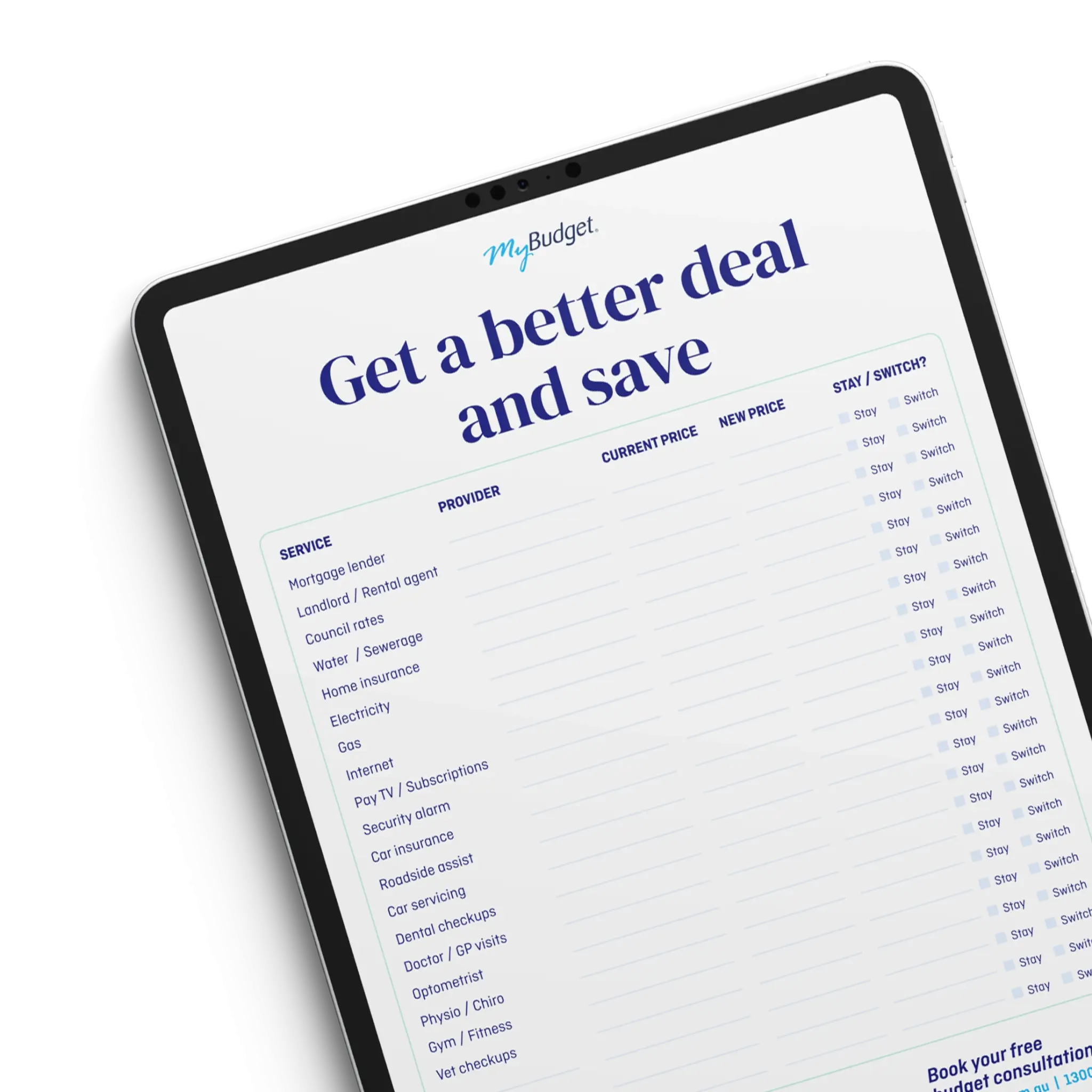
Save on household bills with our Get a Better Deal Checklist. This free tool helps you track, review, and compare deals on insurance, energy, phone, and internet. Don’t pay more than you need, start saving today!
More money-saving habits to cut daily expenses
- Bringing lunch to work could save you $2,500 a year
- Making coffee at home adds another $1,300 back into your pocket
- Trimming just $20 a week from your grocery bill means an extra $1,000 for a holiday.
| Expense Category | Small Change | Monthly Saving | Annual Saving |
| Coffee | Make at home instead of buying daily | $110 | $1,320 |
| Work lunches | Bring from home 3 days/week | $210 | $2,520 |
| Electricity | Switch to LED + energy comparison | $50 | $600 |
| Groceries | Trim $20 per week/ Change Stores | $80 | $960 |
| Phone plan | Switch to SIM-only | $30 | $360 |
| Internet | Switch Providers or Negotiate | $20 | $240 |
| Total Potential Savings | $500 | $6,000 |
How can I reduce household expenses quickly?
If you want to cut your household bills fast, focus on your biggest expenses first. These are the areas where small changes can have the biggest impact:
- Check your mortgage interest rate or negotiate a rent reduction
- Review and cancel unused subscriptions
- Switch energy providers or plans
- Plan meals to reduce grocery waste
- Shop at lower-cost supermarkets like Aldi
- Reduce takeaway and convenience spending
- Compare insurance and phone plans
- Set a weekly spending limit for variable costs.
Start by reviewing these costs, comparing providers and cutting anything you don’t use. Even reducing $20–$50 a week from your spending can add up to thousands saved each year.
How MyBudget can help you manage and reduce household bills
Trusted by over 130,000 Australians and backed by 25+ years of experience, MyBudget helps households reduce household expenses, manage monthly bills and take control of their money.
With MyBudget you can:
- Plan ahead: see your income and expenses up to 12 months in advance
- Build a personalised budget: covering bills, savings and lifestyle spending
- Automate bill payments: avoid late fees and stay on top of household bills
- Create a safety buffer: set aside money for unexpected expenses.
Imagine where your finances could be 12 months from now with a clear plan in place. Many MyBudget clients find they’re able to save thousands on household bills, energy costs and everyday expenses once they have a system in place.
or call 1300 300 922 to book your free, no-obligation appointment.

Save money on household bills FAQs
Can’t find what you’re looking for? See more FAQs…
Lots of people can save anything upwards of $5,000 per year by refinancing their mortgage, switching phone and internet providers, cutting back on energy usage, reducing grocery spending and negotiating a better deal on services. If you’re saving even just a bit of cash each week, it can really add up over 12 months.
It’s a good idea to go through your household bills every about every three months. Providers often offer better deals to new customers and they’ll keep raising your costs if you stick with them long enough.
Refinancing to a lower interest rate can cut your monthly repayments and save you tens of thousands of dollars over the life of your loan. Even just making a bit more on top of your regular repayments can make a huge difference.
Switching electricity providers can save you hundreds of dollars per year. Just take a few minutes to make some comparisons, so you know you’re not getting ripped off and you’ll avoid getting stuck with an outdated or uncompetitive rate.
Subscriptions and discretionary spending are usually the easiest things to cut right back on. Cancel any unused or seldomly used streaming services and memberships to free up cash.
Meal planning, shopping with a list, buying non-perishables in bulk, checking out the prices online, using any loyalty programs you’re signed up for can help cut back on grocery spending without having to make any changes to the way you eat. It’s also beneficial to check out the prices at different stores as offers will be on.
This article has been prepared for information purposes only, and does not constitute personal financial advice. The information has been prepared without taking into account your personal objectives, financial situation or needs. Before acting on any information in this article you should consider the appropriateness of the information having regard to your objectives, financial situation and needs.

