


Back
How to talk about money in a relationship without conflict
Talking about money in a relationship works best when couples communicate early, share visibility through budgeting, respect different money habits, and seek support before stress turns into conflict.

Why talking about money in a relationship feels so hard
Talking about money in a romantic relationship often sits right up there with the conversations we put off longer than we should, even when we know it matters. But avoiding money talk often leads to financial pressure, resentment and money arguments that are never really about the dollars. They’re more about trust, communication and feeling safe.
The good news is you don’t need to be a money expert or have perfect finances. You just need better money conversations, clearer communication strategies and a shared plan that supports your financial health as a couple.
How do you start talking about money in a relationship?
You start by keeping the conversation calm, respectful and focused on shared values, not blame.
The best money conversations don’t happen mid-argument or after a credit card bill arrives. They work best when you treat money talk like a planning date, not a confrontation.
Start with:
- How money currently feels in your household
- What financial priorities matter most to you as a couple
- What you want less of, such as stress, debt or money secrets.
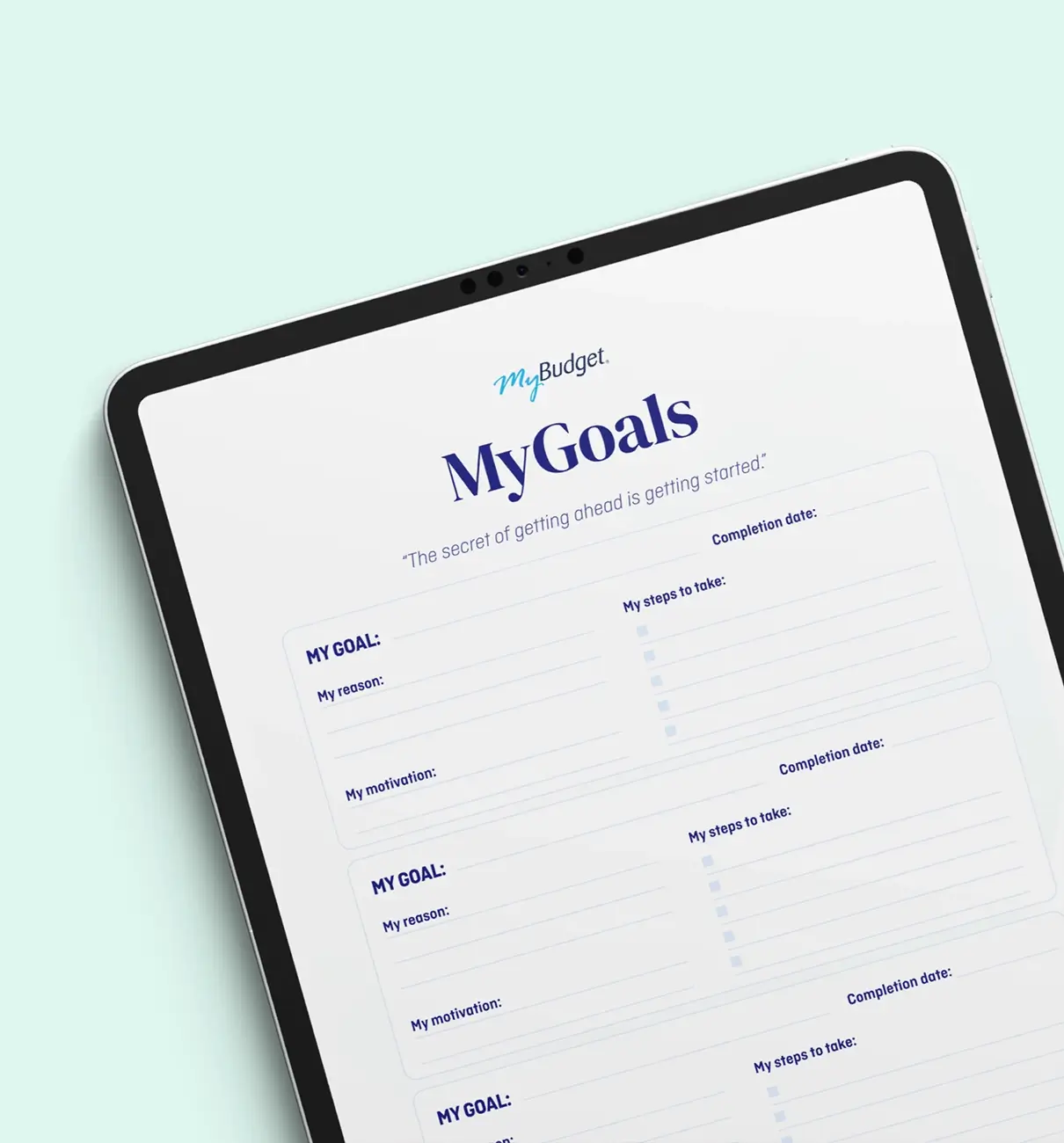
If it feels right, it could be a great time to write your goals down. Try downloading our free Goal Setting Template, this can help turn vague money conversations into something practical and shared.
When should couples talk about money?
Couples should talk about money early and revisit the conversation regularly. You don’t need to wait until you’re engaged, planning a wedding or buying a house. In fact, talking about finances before big commitments can help avoid financial incompatibility later.
Important moments for money conversations include:
- Moving in together or signing a lease
- Combining bank accounts or managing shared finances
- Taking out a loan, credit card or mortgage
- Planning a family, property purchase or retirement
- Feeling ongoing cost of living pressure.
Regular money conversations help prevent financial load falling on one person.
What if we have very different money habits?
Different money habits are common and often shaped by family, upbringing and past experiences.
One partner may prioritise savings goals and an emergency fund. The other may value flexibility, gifts or experiences. These differences don’t mean the relationship is broken. They simply mean your money stories are different.
Understanding the psychology of money and emotional financial decisions can help couples navigate differences without judgement. If your money habits clash, practical steps can help:
- Talk openly about how money was handled in your family growing up
- Agree on shared values before agreeing on numbers
- Use a simple joint Goal Setting Template to align priorities
- Create a budget that allows for both saving and spending
- Revisit the conversation regularly as income and circumstances change.
If you find these conversations hard to navigate on your own, speaking with MyBudget can help. Our expert Money Coaches support couples to reduce money stress and build practical systems together.
How do couples avoid fighting about money?
Couples can reduce money arguments by improving financial visibility and communication.
Most conflicts happen when:
- Expenses or household bills aren’t expected
- One person feels out of control of the bank account
- Debt, credit score concerns or financial pressure build quietly.
A shared budget and joint money plan help remove surprises because when income, expenses and savings plans are visible, money becomes practical instead of emotional. Downloading MyBudget’s free Personal Budget Template helps turn good intentions into a clear plan you can both see, agree on and stick to.

Should couples combine their finances?
There is no single correct way to manage shared finances. Some couples combine everything into one bank account. Others keep separate accounts with a joint savings plan for household expenses. What matters is that the arrangement supports financial trust and feels fair.
Key questions to agree on include:
- Who pays for which financial responsibilities
- How household income and expenses are split
- How savings accounts, investments and Superannuation are prioritised
- How personal allowances or discretionary spending work.
Clarity builds financial intimacy.
How do you budget as a couple?
Budgeting as a couple is about awareness, not restriction.
A strong household budget:
- Includes income, expenses and household bills over 12 months
- Accounts for irregular costs like gifts, weddings and holidays
- Clearly shows debt, savings goals and an emergency fund.
When both partners can see the full picture, budgeting becomes less about control and more about making confident decisions together, and if combining finances feels tricky, a little extra support from one of our expert Money Coaches can make all the difference.
What if one partner is stressed about money?
Financial stress can show up as avoidance, irritability or money shame.
If one partner is feeling overwhelmed, empathy matters more than solutions. Financial wellbeing improves when people feel heard and supported.
Helpful next steps include:
- Identifying sources of financial pressure
- Focusing on what you can control right now
- Leaning on a support network or reaching out for professional budgeting support.
Money stress reduces when there is a clear budget plan and a system for managing expenses, getting out of debt and saving money, which is exactly what MyBudget has helped Australians do for over 25 years, supporting more than 130,000 people to feel confident, organised and in control of their money.
Do money check-ins actually help relationships?
Yes. Regular money dates can help couples stay aligned, provide clarity around financial goals, and reduce the constant worry about what’s coming next.
A short monthly check-in can cover:
- Upcoming expenses and household bills
- Progress on savings goals or joint investments
- Any changes to income or financial priorities.
Money should never be a silent burden. Shared awareness strengthens financial trust.
When should couples get help with money?
Couples should seek support when money conversations lead to conflict, avoidance or ongoing anxiety.
Professional help is especially important if there are signs of financial abuse, hidden debt, gambling issues or fear of legal action during separation or divorce.
Talking about money won’t fix everything overnight. But avoiding it almost guarantees problems later.
With honest communication, empathy and a shared financial plan, couples can turn money from a source of stress into a tool for building trust, security and long-term stability together.
The pressure on their relationship was mounting, and the arguments were starting to affect their family, until one call changed everything. Watch Michelle & Phil’s story.
How MyBudget can help take the stress out of money in your relationship
MyBudget helps couples with money management by taking the stress out of budgeting, bills and everyday finances, which can improve communication, reduce tension and strengthen your relationship. If you’re ready for extra financial support, you can enquire online or call MyBudget today on 1300 300 922 to speak with one or our caring Money Coaches.
Money & Relationship FAQs
Can’t find what you are looking for? See more FAQs…
You start by choosing a calm time and framing the conversation around shared goals rather than blame. Focus on how money feels, what you want to improve together, and what support looks like for both partners.
Different money habits are common and usually shaped by upbringing and past experiences. Understanding each other’s money mindset helps couples compromise, reduce conflict, and create a system that feels fair to both people.
Couples avoid money arguments by improving visibility and communication. Sharing budgets, planning for upcoming expenses, and holding regular money check-ins helps prevent surprises and reduces emotional reactions around spending.
Couples should talk about money early in the relationship and revisit it regularly. Key moments include moving in together, sharing bills, taking on debt, or when financial stress starts affecting daily life.
Couples should get help with money when conversations feel stuck, stressful, or overwhelming. Professional budgeting support can help create clarity, manage bills, reduce financial stress, and align long-term goals.
This article has been prepared for information purposes only, and does not constitute personal financial advice. The information has been prepared without taking into account your personal objectives, financial situation or needs. Before acting on any information in this article you should consider the appropriateness of the information having regard to your objectives, financial situation and needs.