



Back
How to clean your credit report and repair your credit score
If your credit score has taken a hit and you’re wondering “How can I fix my credit score?” This guide will help you learn the fastest way to repair your credit score in Australia and rebuild your credit rating with confidence.
What is a credit report, and what is a credit score in Australia?
Think of your credit report like your financial report card, while your credit score is the grade. In Australia, credit scores range from zero to 1,000 or 1,200, depending on the credit reporting agency. Lenders use it to gauge financial reliability, identity verification and credit risk.
A good score can mean lower interest rates, cheaper credit fees, and stronger borrowing power. A low score (or bad credit report) can mean higher rates and limited access to credit providers.
What does a credit report include, and how do credit reporting agencies collect your data?
Your credit report includes:
- Personal details (name, date of birth, address, driver’s licence number)
- Credit inquiries (soft inquiries, hard inquiries)
- Your current credit accounts and credit limits
- Repayment history, late payments, overdue debts and credit defaults
- Court judgments, debt collectors, financial hardship information
- Data collected by Australia’s credit reporting agencies: Equifax, Experian, illion.
Where can you check your credit report for free in Australia?
You can access a free credit report every three months from:
- Equifax
- Experian
- illion.
Because each credit reporting company receives different lender data, checking all three ensures full visibility of your credit file.
You can also get your credit score for free through platforms like Canstar, Finder or Wisr.
What’s the difference between Equifax, Experian and illion?
Australia’s three consumer reporting companies all use different scoring models:
- Equifax: 0-1200
- Experian: 0-1000
- illion: 0-1000.
Scores vary because lenders don’t have to report to all agencies.
Why are scores different across credit reporting agencies?
Each credit bureau calculates credit scores differently, weighing factors like payment history and credit utilisation uniquely. Plus, lenders aren’t required to report to all three, so your credit file may vary between agencies.
How is a credit score calculated and what affects it the most?
Your credit score is based on several key factors:
- Payment history: late or missed payments drag your score down
- Credit utilisation: using too much of your available credit can hurt your score
- Length of credit history: a long, well-managed credit history helps
- Types of credit: a mix of secured loans, unsecured loans, credit cards, and overdrafts can be beneficial
- Public records and credit inquiries: too many credit applications in a short time is a red flag.
Here’s an example of how Equifax categorises scores:
- Below average (0-459) high risk of negative credit events
- Average (460-660) moderate risk
- Good (661-734) lower risk
- Very good (735-852) very low risk
- Excellent (853-1200) almost no risk.
A higher score means better chances of loan approvals and lower interest rates.

What is a default, how long does it stay, and how does it impact your credit score?
A default is a serious black mark on your credit report and happens when:
- A debt of $150+ is overdue by more than 60 days
- The lender has followed the debt escalation process.
Defaults stay on your report for five years, even after repayment.
What is a bad credit report, and what does it cost you financially?
A bad credit report typically includes:
- Defaults
- Frequent hard inquiries
- Missed repayments
- High credit utilisation
- Accounts in hardship arrangement.
According to a 9News report, someone with a poor score could be charged 19.99% on an unsecured loan at ANZ compared with 7.49% for someone with excellent credit. Other lenders (like Latitude) can show even larger gaps.
How to clean your credit report and improve your credit score without paying for credit repair
Here are the most effective steps you can take to repair your credit score and clean your credit report:
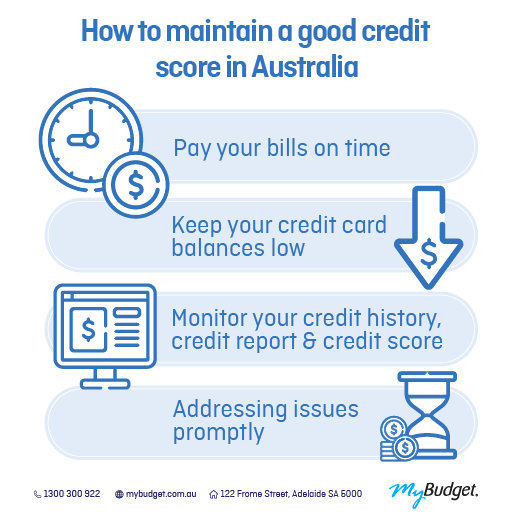
- Keep credit card balances low: this improves your credit utilisation, which is one of the fastest ways to lift your score. If you’re struggling with credit card debt, our guide on how to get out of credit card debt in Australia shows you practical ways to reduce your balance
- Stop making only minimum repayments: minimum payments keep your balance growing and your credit score falling. Our article on the true cost of making only minimum payments explains how this impacts interest, long-term debt and your credit rating
- Avoid relying on Buy Now, Pay Later (BNPL) services: late or missed BNPL payments can be recorded on your credit report. If BNPL is getting out of hand, our guide on BNPL and your credit score can help you gain control again
- Reduce or close unused credit accounts: too many open accounts or high total available credit can negatively impact your credit rating
- Pay bills and loans on time: set up automated payments or reminders so you never miss a due date
- Reduce your credit limits: lower limits can help manage spending and improve your credit utilisation rate
- Avoid unnecessary loan applications: every hard inquiry can temporarily reduce your score
- Monitor your credit report regularly: this helps you spot errors, identity theft or suspicious activity early
- Ask for hardship support if you’re struggling: arrangements with lenders can prevent defaults and protect your credit file, and our guide on financial hardship and your credit score explains how hardship support works and how it impacts your credit report.
Recent positive behaviour has a bigger impact than older mistakes, so even small changes can shift your score in the right direction.
Can you remove a default from your credit report in Australia?
You can only remove a default from your credit report if it was listed in error. If you think a default is incorrect, take these steps:
- Contact the creditor to dispute it
- If unresolved, lodge a complaint with the credit reporting agency
- If necessary, escalate to the Australian Financial Complaints Authority (AFCA).
Can credit repair companies clean your credit report?
You might see companies promising to ‘wipe’ bad marks from your credit report, for a hefty fee. The truth? If a default or missed payment is legitimate, it stays on your report.
How can budgeting help repair your credit score?
A solid personal budget helps you:
- Avoid missed repayments
- Reduce credit card debt
- Build an emergency fund
- Stay organised with upcoming bills.
- Building savings is a huge part of repairing your credit score, and even small amounts add up. Use our Savings Calculator to see how quickly your buffer can grow and how it can help protect your credit report from future missed repayments.
Need help getting a budget started? Download our free Personal Budget Template.
How can MyBudget help you clean your credit report and rebuild your credit rating?
At MyBudget, we take the stress out of money management with a 12-month personalised budget plan that’s tailored to your unique financial situation. If you need a more customised approach to managing your debts and improving your credit score, we can help by:
- Paying bills on time
- Reducing overdue debts
- Creating long-term financial security
- Speaking to your creditors for you
- Preventing further defaults, missed payments or hardship markers.
Did you know, most MyBudget clients pay off their unsecured debts in under three years! With over 130,000 Australians helped, MyBudget has been a trusted financial solution for over 25 years.
Call 1300 300 922 today to chat with one of our expert Money Coaches or enquire online for a free, no-obligation consultation.
Buy now pay later activity can appear on your credit report, depending on the provider and the situation. While not all BNPL providers report positive repayment history, missed payments, defaults, or hard credit checks can be recorded by credit reporting bodies and seen by lenders. This information may affect how credit providers assess your credit score, borrowing capacity and future credit applications.
It can have a positive impact if you make regular payments, but missed payments could hurt your credit.
Many clients see their credit score improve because consistent on-time payments reduce missed or late repayments. A structured credit card payment plan helps rebuild your credit file, strengthens your credit report and supports your overall financial position as you pay down credit card debt.
Paying down debt on time through a structured budget can support your credit score over time. When repayments are managed consistently, your credit history benefits from on-time payments and reduced outstanding balances.
MyBudget helps people take control of their finances by creating a personalised budget, organising their bills and providing day to day money management support. We help reduce financial stress, manage debt, build savings and give clients a clear, structured plan for their financial goals. With over 25 years of experience and more than 130,000 Australians helped, our system provides stability, confidence and long term results.
The first step in comparing your lending options is completely free and without obligation. You can book a free home loan health check or initial call with a MyBudget Loans specialist to review your current mortgage and explore how much you could save through refinancing, which is a great way to start taking the weight off your shoulders.
This article has been prepared for information purposes only, and does not constitute personal financial advice. The information has been prepared without taking into account your personal objectives, financial situation or needs. Before acting on any information in this article you should consider the appropriateness of the information having regard to your objectives, financial situation and needs.